Day One
——— ❖ ———
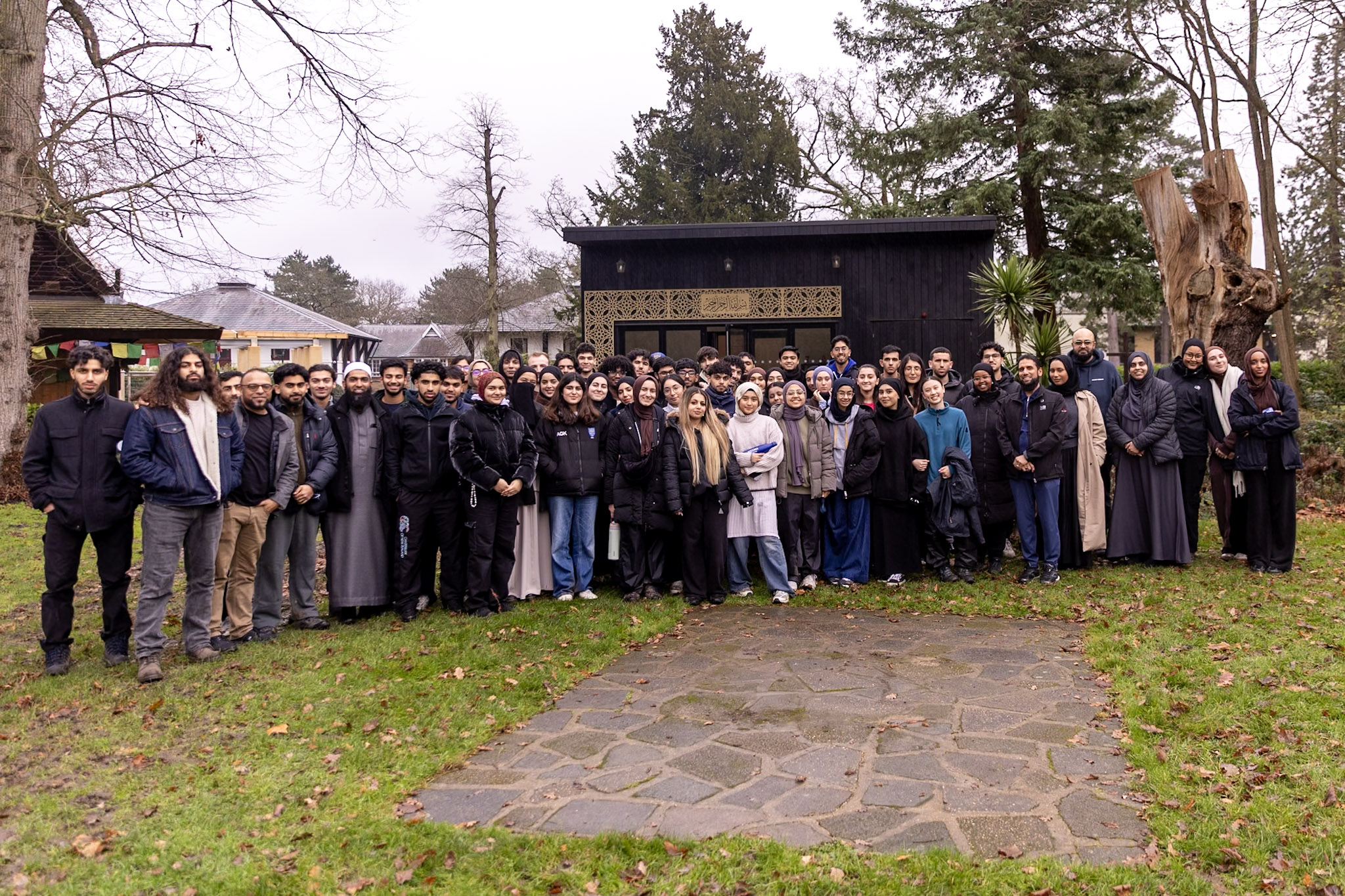
On the 15th December, the Avicenna Foundation launched its annual Winter Retreat, welcoming the new 2025 Cohort at Gilwell Park Adventure Centre, hosted once again by the UK Muslim Scouts Fellowship.
Scholars arrived from across the country – some lost in the quiet country roads, others embarking on three-hour journeys with fellow scholars and staff, and some travelling a shorter distance through East London.
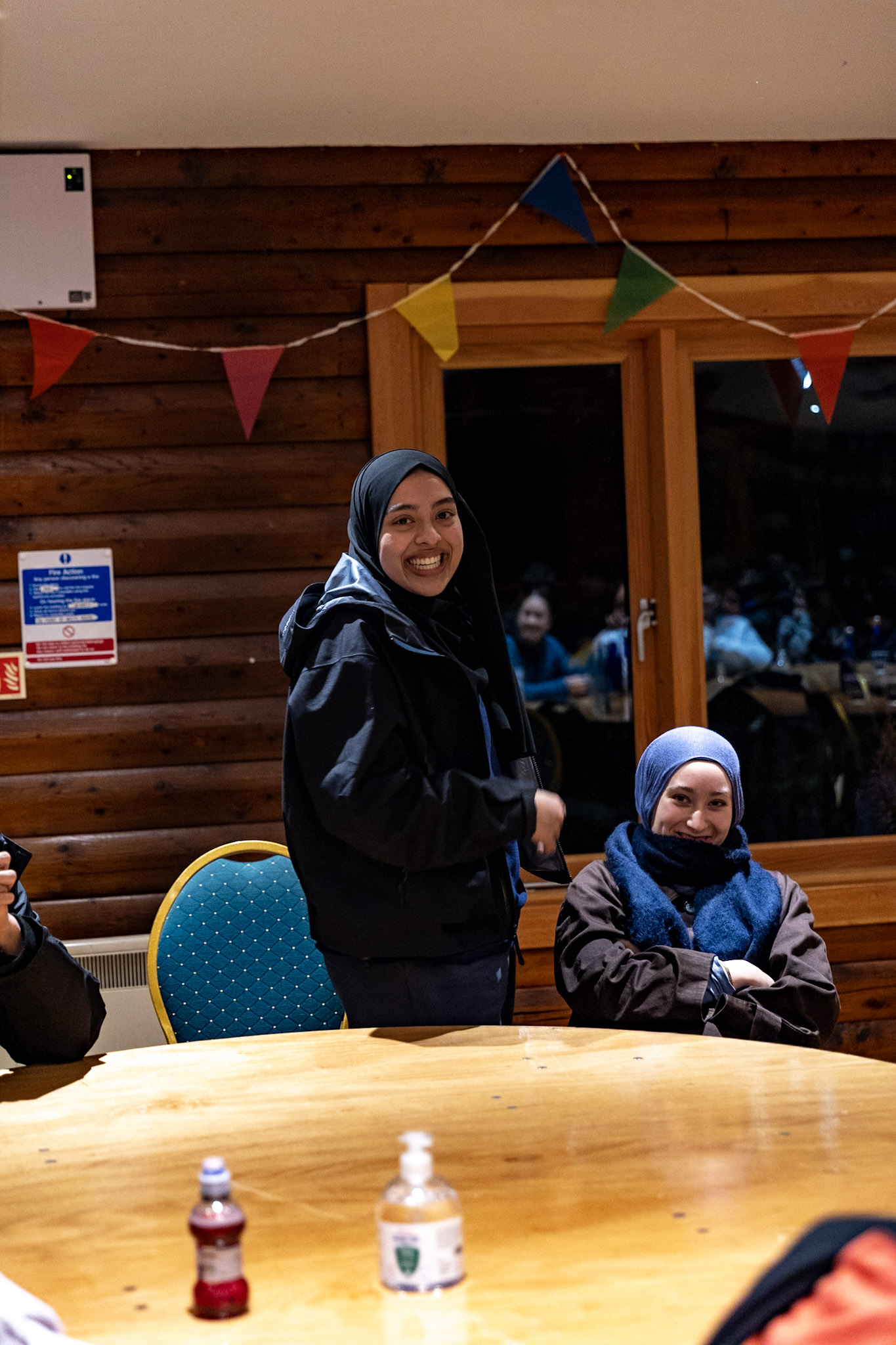
The day began in the Amphitheatre, where the Muslim Scouts welcomed scholars with a generous breakfast spread of croissants, confectionery, and freshly brewed coffee. Conversations flowed easily as scholars caught up with one another, while the new 2025 Cohort took their professional headshots. A light-hearted game of bingo gently broke the ice, giving scholars the chance to learn more about one another – from who owned the most pets to who was afraid of heights.
The day then moved into its first set of activities, including climbing and fish preparation. These sessions challenged scholars both physically and mentally, building agility, stamina, and practical camping skills. Working together in unfamiliar settings cultivated trust, teamwork, and resilience.
Throughout the retreat, salah was prayed together in congregation, reinforcing a sense of collective purpose. Later in the day, the focus shifted from physical challenge to spiritual reflection with the introduction of the Chaplaincy and Tarbiyyah (character refinement) programmes, led by Imam Abdurrahman.
The sessions opened with a moving Quranic recitation by Qari Yahya Ali from Cohort 2025, followed by reflections on the verse:
‘And hold firmly to the rope of Allah all together, and do not become divided’.
– Surah Al Imran (3:103)
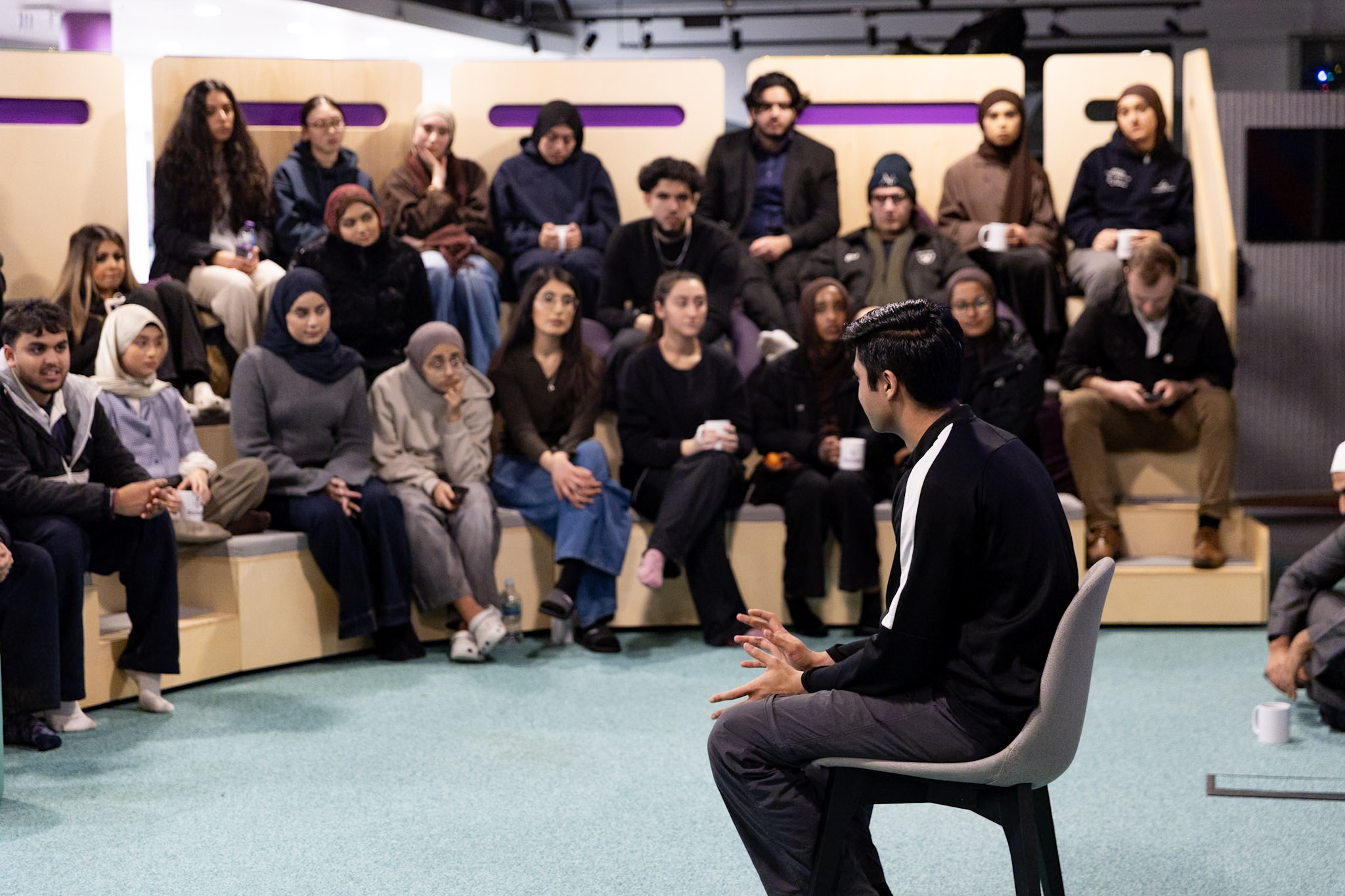
Imam Abdurrahman explained that the rope of Allah has been understood by scholars to mean the Quran, Islam, and the covenant of Allah. The command to hold on together emphasises unity as a collective obligation, while the prohibition of division serves as a clear warning against fragmentation. During the Tarbiyyah session, scholars were encouraged to reflect on the relationship between salah and daily life.
‘Look at your salah, and then assess your life’ – Imam Abdurrahman
Imam Abdurrahman highlighted how academic pressure often leads students to neglect their spiritual and emotional well-being. He reminded scholars that our bodies are trusts from Allah and caring for them is an act of faith.
The importance of having an Islamic mentor and grounding one’s life firmly in faith was also emphasised:
‘With faith, we have everything. Without faith, we have nothing’.
As future leaders, we were reminded that leaders
Conversations on Ideas, Voice, and Leadership with Syima Aslam
A later session featured Syima Aslam MBE, CEO, and Founder of the Bradford Literature Festival – one of the largest literature festivals in the UK and Europe, and a future Trustee Board member of the Avicenna Foundation. Her reflections reaffirmed the continued relevance of the humanities, emphasising their necessity in shaping and challenging the stigma often attached to pursuing arts-based disciplines.
Syima spoke about the overlap between the arts and politics, noting that culture ultimately shapes political realities. She described multiculturalism as being to humans what water is to fish – not optional, but essential. She encouraged scholars to resist dogmatic thinking, to step outside of echo chambers, and to actively engage with ideas that challenge their own. Disagreement, she reminded us, should be approached with hikmah and ihsaan – wisdom and excellence – carried out with grace and beauty. Reflecting on the political landscape, Syima highlighted how culture controls discourse, particularly within a Westernised world where American narratives often dominate. If representation is to be meaningful and voices are to be heard, she stressed, then communities must actively seize and shape the narrative rather than passively consume it.
The discussion was enriched by reflections from scholars across cohorts. Cohort Two scholar, Maryam Asif Rana, spoke about the shifting narratives surrounding the humanities, particularly the stigma within South Asian communities, where arts-based subjects have often been undervalued. She noted how earlier migrant generations prioritised stability and security, while newer generations are increasingly re-evaluating what meaningful and impactful careers can look like. Responding to this, Syima observed that such stigma is likely to fade with societal progression particularly as AI and automation increase the value of critical, creative, and independent thinking. The importance of being well-read was also emphasised – not simply as an academic pursuit, but as a means of forming one’s own opinions.
Cohort Three scholar Nur Burhanudin highlighted the need for sincerity and clarity, cautioning that performative intellectualism can hinder the arts, while Cohort One scholar Maha Shaikh raised concerns about the future of literacy and overreliance on AI. Addressing these points, Syima affirmed that AI is here to stay, not as a threat, but as a tool to be used with intention. She concluded with a reminder to never let others define who you are or where you belong, and to approach disagreement with grace and kindness.
Community, Debate and Belonging
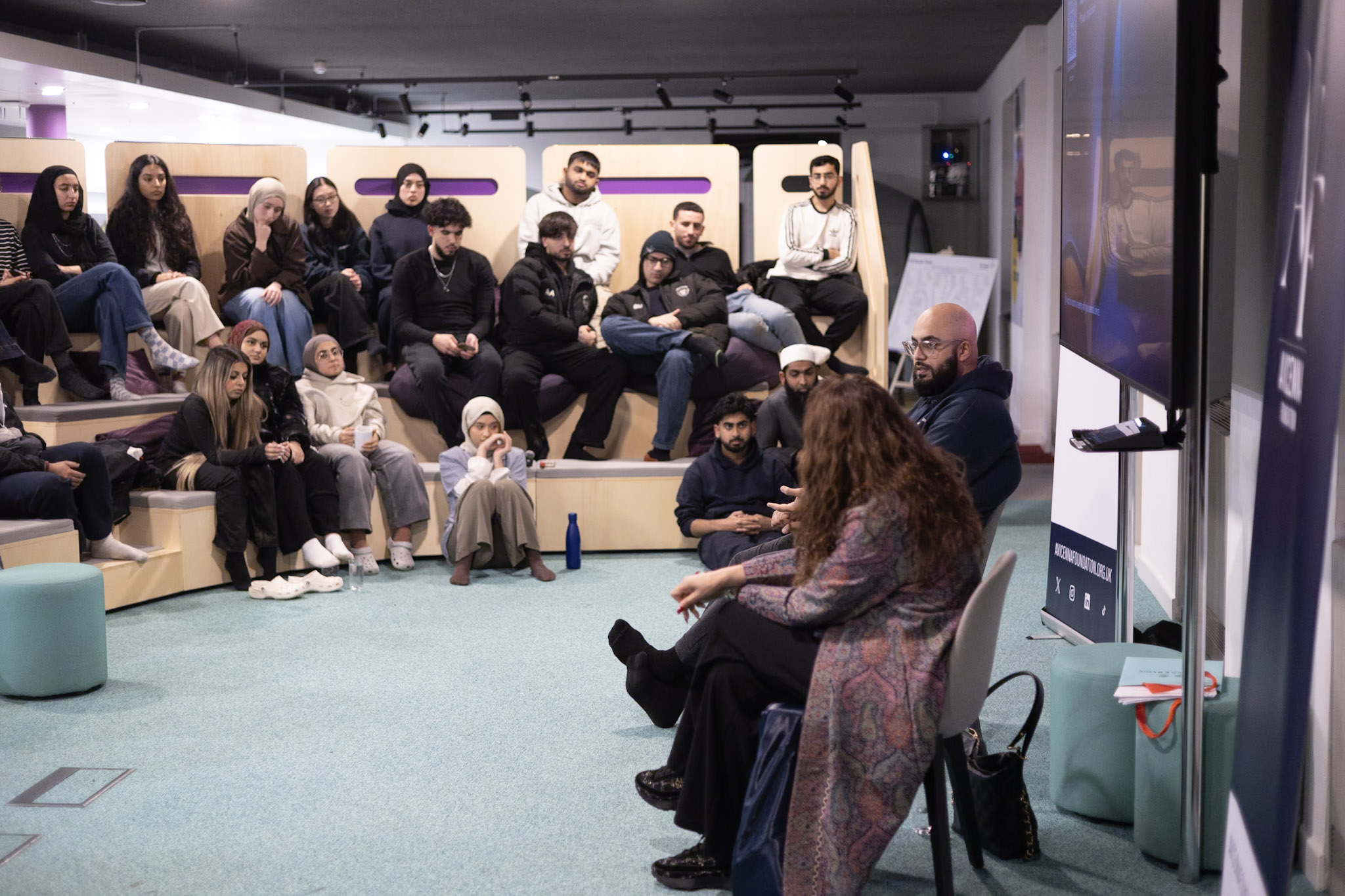
Debate night took place in the Dorothy Hughes Building, bringing together scholars from all three cohorts and showcasing the confidence and talent of Cohort Three in particular. The session highlighted debate as a space not only for discussion, but for developing the ability to express ideas clearly and articulate arguments with confidence. As was reminded during the next day, ‘your voice can reframe debates, and your excellence can open doors’. In true Avicenna fashion, the debates were accompanied by enthusiastic ‘moos’ and table-banging, reminiscent of British Parliamentary debate.
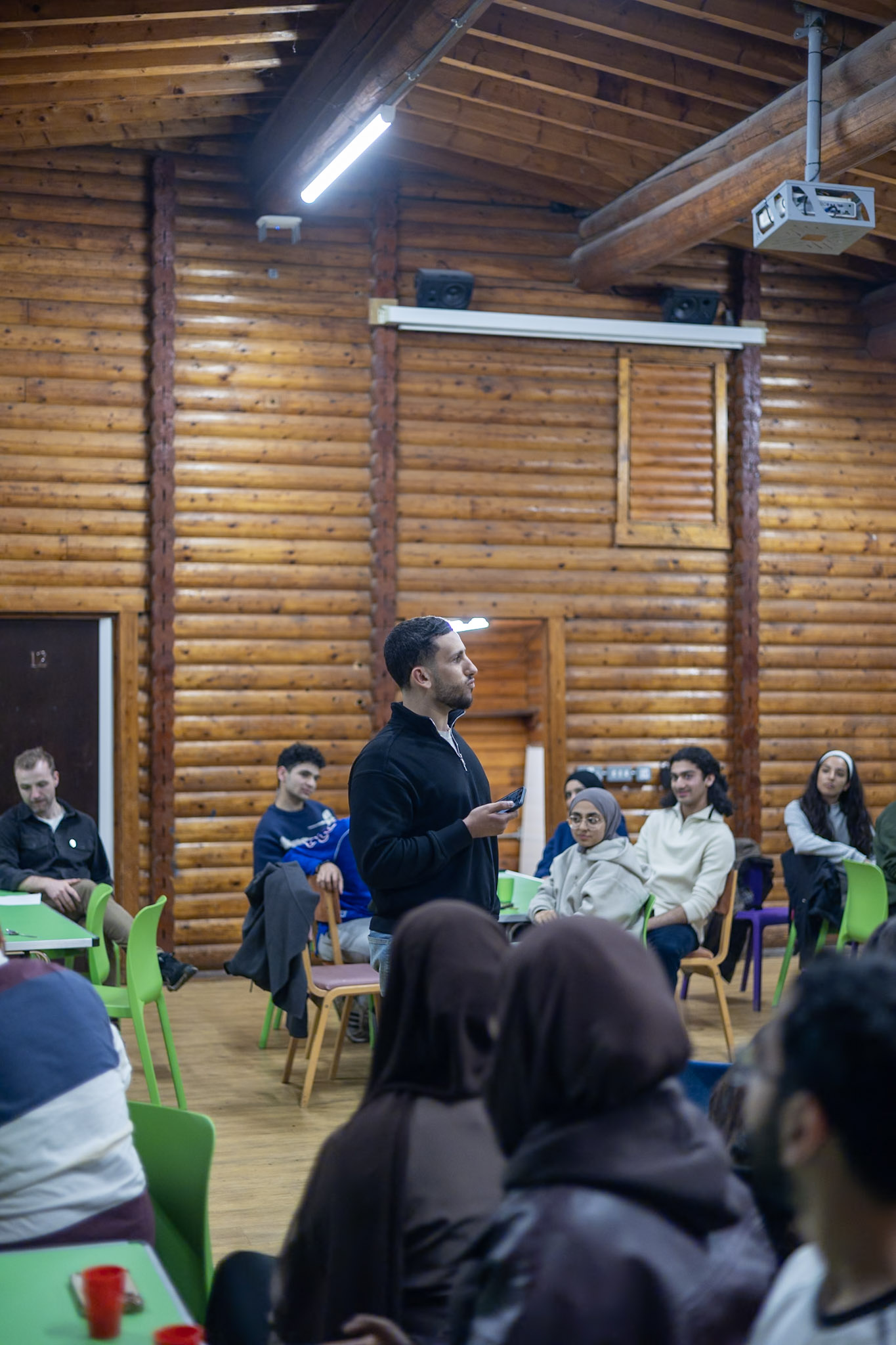
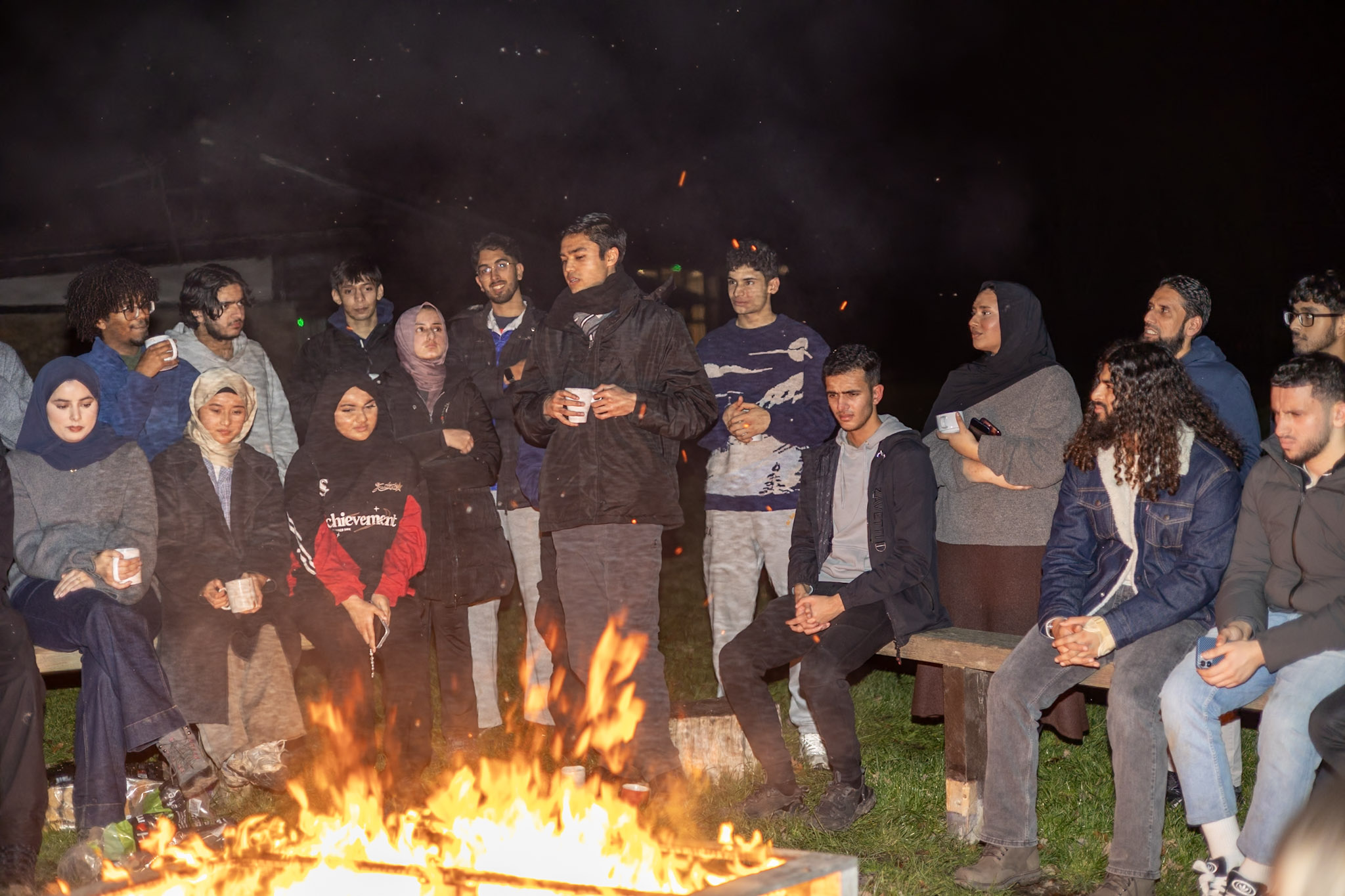
As the evening drew to a close, scholars gathered around the campfire as our General Manger, Jordan Dalton, announced the Leadership Committee roles for Chair and Vice Chair across the cohorts. At one point, Talha Siddiq, from the 2023 Cohort, called him out, joking that Jordan always makes direct eye contact with the winner before announcing their name, making the outcome fairly obvious. Despite the teasing, the announcements themselves were meaningful.
Yahya Ali, Vice Chair for the 2025 Cohort, reflected that ‘we are in the top percentile as Muslims’. Zaynab Khan, Vice Chair for the 2024 Cohort, shared that ‘this programme is an investment within us’. While Uzair Ahmed, Chair, reminded everyone that ‘we are part of the same community and family’.
Later, with the campfire burning, our dear Chair added, ‘I see the fire burning in your souls’. He was immediately heckled, with calls for him to denounce his role as Chair.
Day Two
——— ❖ ———
Endurance, Skill, and Craft
Day two began with an attempted hike at 6:45am, in the cold and darkness of winter. It was everything but a hike. While most scholars made their way on foot, two scholars from Cohort One Noora Al-Nemrat and Naeima Zaman chose an alternative route – hiking in Noora’s car – which promptly broke down. They were stranded for several hours and unfortunately missed breakfast.
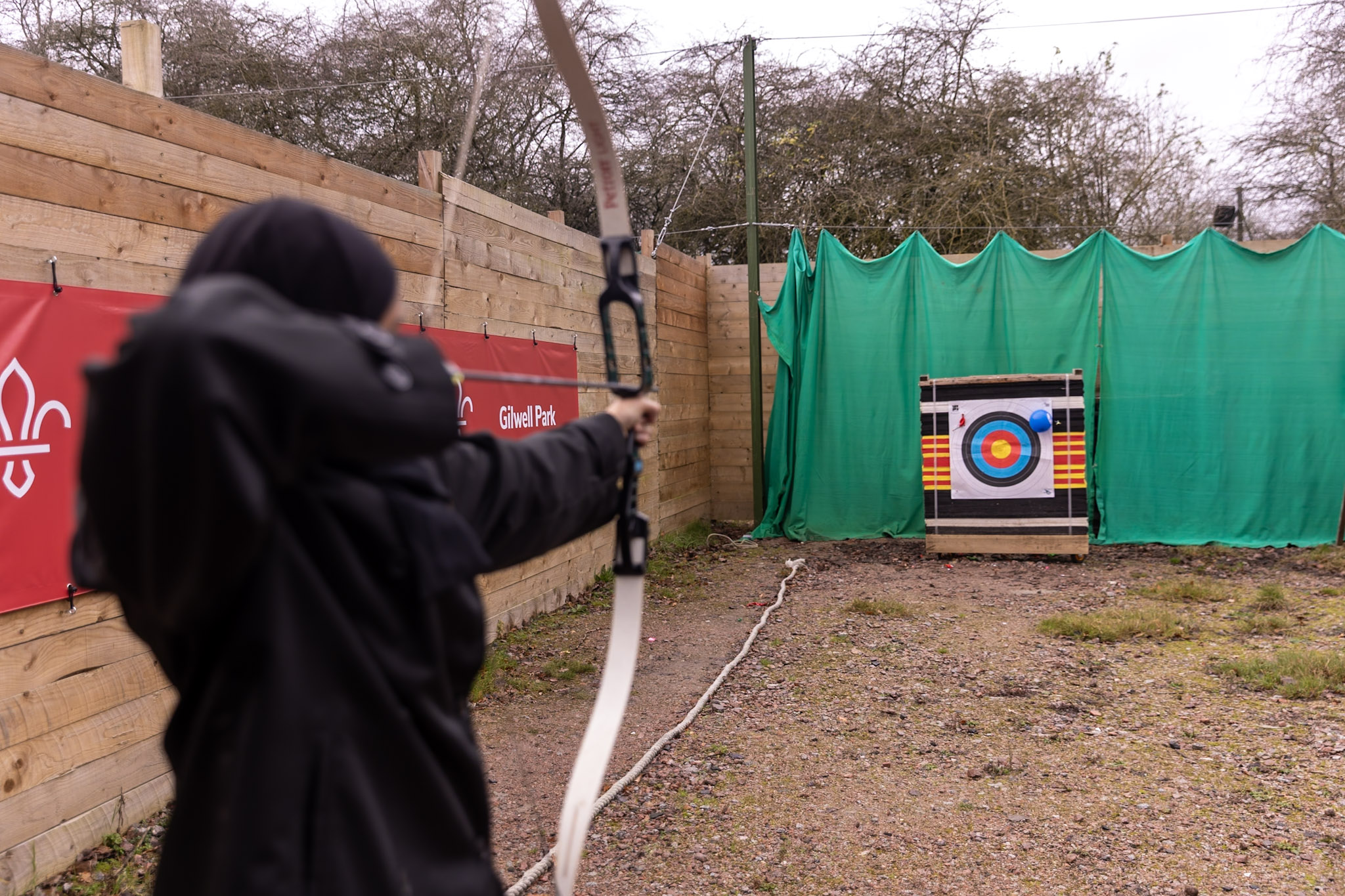
The day’s activities then moved into archery and wallet-making. During the archery session with the Muslim Scouts, scholars were taught the Mediterranean technique, engaging in a sport encouraged within the Prophetic tradition.
The session took on a competitive edge through a points system, echoing the words of the Prophet ﷺ: ‘There is no competition except in archery, camel racing, and horse racing’. – Abu Dawud
The activity balanced focus, discipline, and light-hearted rivalry.
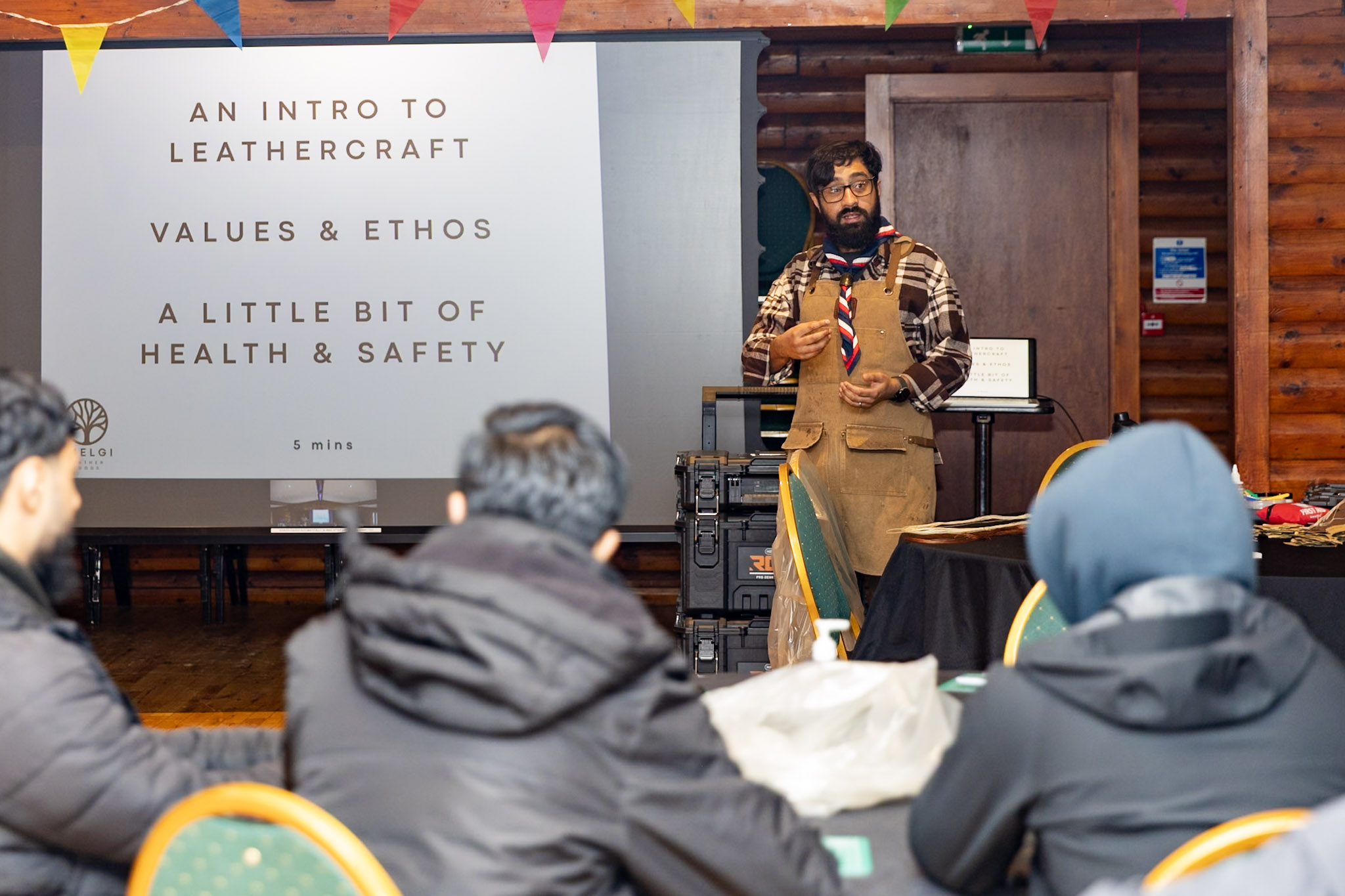
The wallet-making workshop, led by Usmaan Mufti, explored the fundamentals of leather craft, emphasising the values behind making and the importance of skilled craftsmanship as an ethical and intentional practice. Usmaan also reminded scholars of their role as custodians of animals, teaching that using all parts of an animal is an ethical responsibility, and that waste is not sunnah. Craft, he explained, requires adab and practise – qualities that extend beyond the workshop and into everyday life.
Discussion on Leadership, Knowledge, and Responsibility with Sir Mufti Hamid Patel
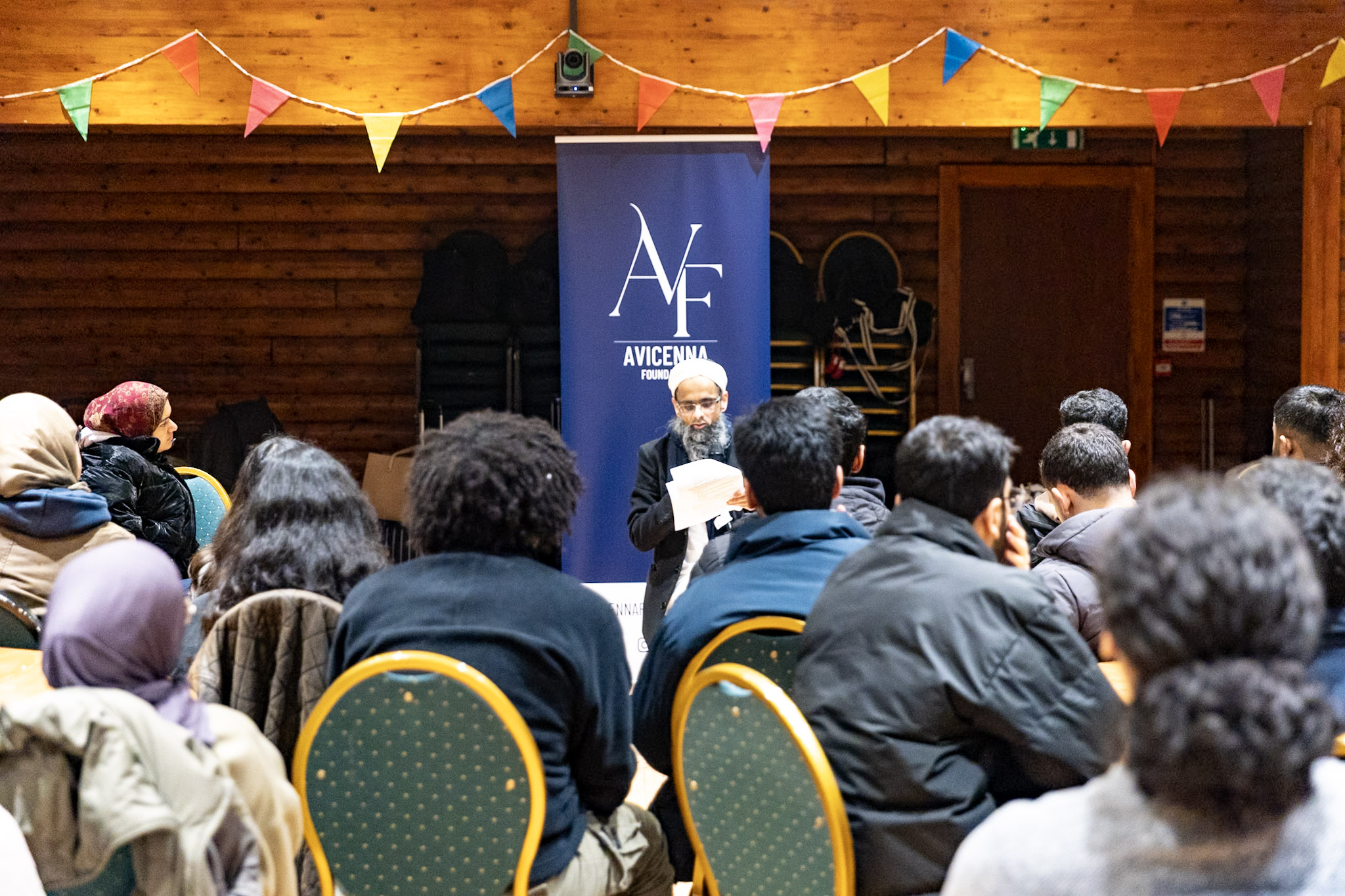
The Foundation had the honour of hosting its patron, Sir Mufti Hamid Patel, whose reflections offered both reassurance and challenges in equal measure. As the first British Muslim to be appointed Chair of OFSTED, Sir Mufti Hamid shared not only professional milestones, but the personal cost of occupying visible leadership as a Muslim in public life. He spoke candidly about the backlash he faced online – anxieties projected onto visible markers of Muslim identity: the turban, the beard, the body read as ‘other’.
These reactions, he explained, are often rooted in what can be described as the moralisation of fear: a process through which fear is legitimised as a moral concern, allowing exclusion and hostility to be justified in the language of protection, order, or national survival. In such a climate, Muslims are frequently confronted with two equally flawed narratives – that one must either dilute their faith to be considered a ‘good citizen’, or reject their country entirely to remain authentically Muslim. Both positions distort reality and deny the possibility of principled belonging.
Sir Mufti Hamid challenged us to instead break these stigmas through excellence, reminding us that progress is neither accidental nor easy. To achieve meaningful change requires discipline, sacrifice, and mastery – what Islam frames as Ihsaan: excellence not only in output, but in character. Leadership, he reminded us, demands focus, perseverance, and the humility to recognise one’s own limitations. Even the Prophet ﷺ carried the weight of responsibility with both confidence and concern – self-doubt, when balanced, keeps one grounded.
This ethos was powerfully tied to an Islamic understanding of knowledge. The Prophet ﷺ himself drew a clear distinction between knowledge that elevates and knowledge that distracts, supplicating:
‘O Allah, I ask You for beneficial knowledge, and I seek refuge in You from knowledge that does not benefit’. – Sahih Muslim
Knowledge in Islam is not neutral; it is purposeful. That which leads to service, justice, and the betterment of humanity is sought, while knowledge divorced from ethical consequence is treated with caution.
In this light, our studies are not merely academic pursuits – they are a form of worship. To learn sincerely, to understand how decisions are made, and to collaborate across differences is to position oneself to serve society with integrity. Sir Mufti Hamid emphasised that leadership is rarely comfortable. It requires patience with Allah, an unwillingness to compromise on fundamentals, and the courage to inhabit roles before feeling completely ready for them.
Stories, he noted, often become invisible forces for change, and by embodying excellence, one can quietly reframe debates and open doors previously closed. The message was ultimately one of responsibility: to work hard, to tie the camel, and trust Allah with the outcome, and to recognise that visible Muslim excellence is itself a form of contribution. In serving humanity well, we serve our faith, and in doing so, we reclaim the narrative of what it means to belong.
Closing Reflections
As the retreat drew to a close, it was impossible to ignore the moments of exhaustion – the cold mornings, the long days, and the physical and emotional demands of being present throughout. Yet these moments served as a reminder that hardship builds resilience, and resilience shapes leaders.
The retreat closed with reflections from our CEO, Imran Sanaullah MBE, who posed a simple but searching question:
What is your narrative? How is Avicenna shaped by the individual, and in turn, how does the individual shape Avicenna?
He reminded scholars that akhlaaq is one’s personal brand – the quality that endures when titles fade – and that it is ultimately character that carries a person forward.