Wilton Park and Diplomacy
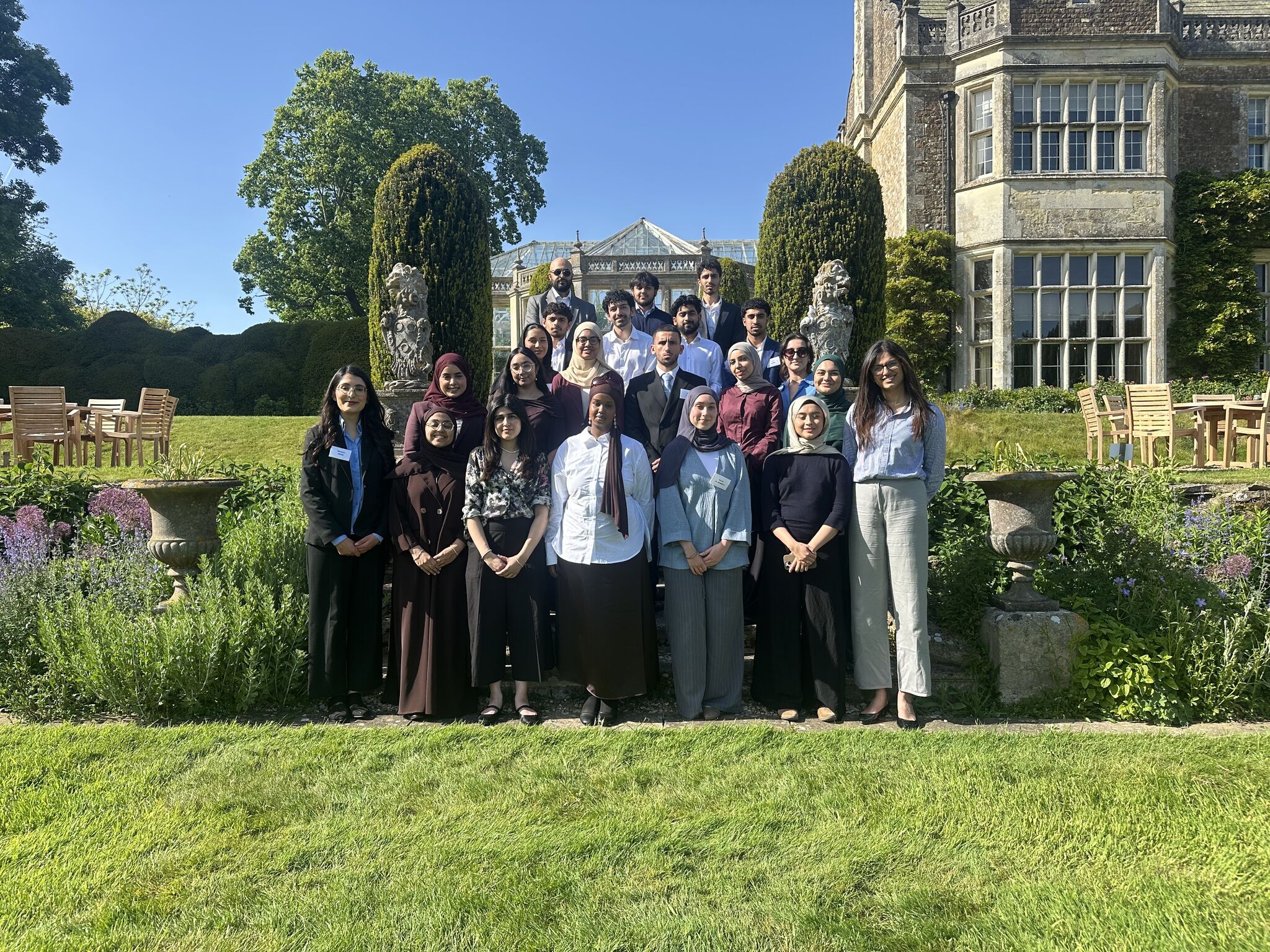
The Avicenna Foundation’s Insight Day at Wilton Park offered an opportunity to encounter diplomacy
not merely as an abstract field of foreign policy, but as a lived practice of dialogue. Wilton Park is
recognised as a space for convening influential policy conversations on some of the world’s most
pressing issues. Yet, what struck me most was not only its formal purpose, but the ambience it created:
quiet, hidden from public spectacle, and deliberately designed for thoughtful exchange.
Our CEO, Imran Sanaullah, reflected on the distinctive nature of Wilton Park as a hidden space of
dialogue. Perhaps the hiddenness of Wilton Park is itself symbolic of ef ective diplomacy. Diplomacy
is often imagined through public speeches, of icial statements, and visible negotiations. In reality,
some of its most meaningful work takes place away from publicity, through intimate conversation, and
the refinement of ideas before action is taken.
This was reinforced by Wilton Park’s emphasis on engaging deeply with diverse perspectives and
drawing on voices beyond government. Deputy Prime Minister, David Lammy’s statement that,
‘Wilton Park really matters to this agenda’ captured the importance of such spaces. It suggested that
diplomacy is not only about the representation of government, but also about creating environments in
which complex issues can be approached with seriousness and dignity.
Language and Diplomacy
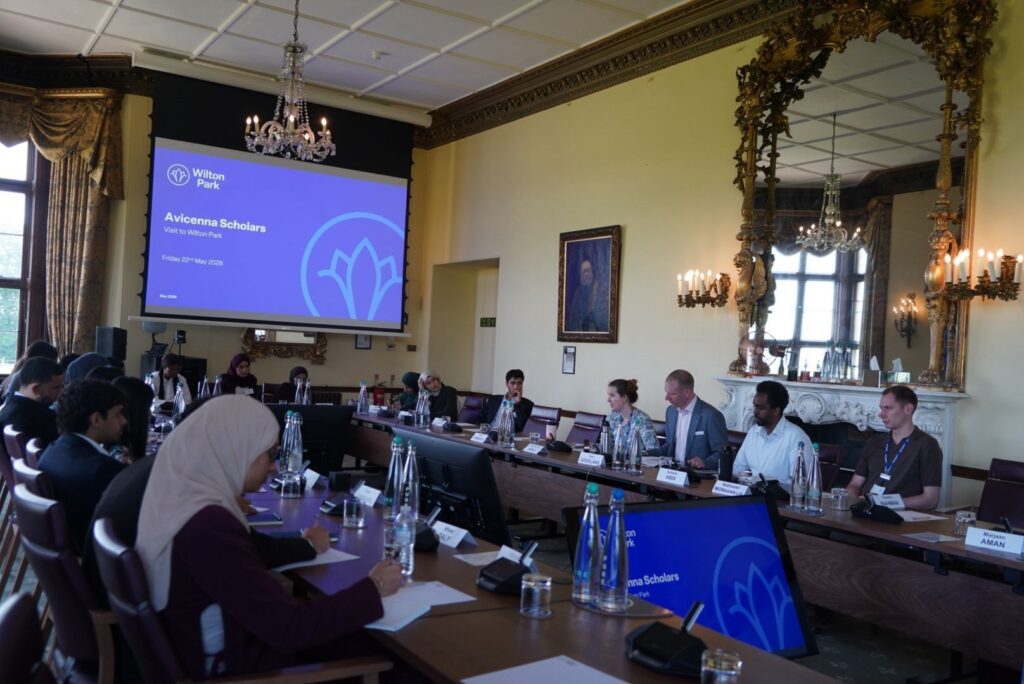
During the session on diplomacy, my group was asked to reflect on what diplomacy requires.
A key theme that emerged for me was linguistic capability. This did not simply mean the ability to
speak multiple languages, but more deeply, the ability to inhabit another language with authenticity –
to understand the idioms, cultural references, and humour.
This made me think about language as an art rather than a technical skill alone. To communicate
diplomatically is not simply to translate words accurately, but to express oneself with clarity and
grace. It requires knowing how to carry oneself in conversation – how to enter a room, to address
others, and to maintain composure in moments of tension.
In this sense, Wilton Park itself seemed to embody a form of diplomatic etiquette. The setting
encouraged a certain refinement, not in a superficial sense, but in the deeper sense of discipline,
attentiveness, and respect. It made me reflect on whether true diplomacy is revealed most clearly
under pressure. It is easy to appear articulate when conversations are agreeable; the greater test is
whether one can maintain decorum when conversation becomes dif icult, emotional or politically
charged.
British Identity, Belonging, and National Symbols
The discussion on British identity and the English flag raised one of the most dif icult questions of the
day: can a national symbol both unite and divide? In principle, flags are intended to create belonging.
They gather people beneath a shared image of place, memory, and collective identity. Yet, the St
George’s Cross does not always operate in such a simple way. For some, it remains a symbol of
national pride, heritage, and community. For others, it carries more uneasy associations, particularly
when it appears in protests shaped by anger, exclusion or far-right politics.
This does not mean that the English flag is inherently divisive, nor that those who fly it should be
reduced to a single political meaning. Rather, it suggests that the flag has become a contested symbol.
Its meaning is shaped by where it appears, who carries it, and what political language surrounds it.
When displayed during moments of national celebration, it may signal belonging. When displayed at
demonstrations marked by hostility or anti-immigration rhetoric, it can take on a more threatening
meaning. In those moments, the flag is no longer only a symbol of identity; it becomes vulnerable to
political weaponisation.
This made me reflect on the relationship between symbols and fear. A flag can be used to gather
people around shared values, but it can also be used to draw boundaries around who is imagined to
belong. The question is not only what the St George’s Cross represents in the abstract, but what it
evokes in particular contexts. Does it invite people into a shared national story, or does it become a
visual language of exclusion? This ambiguity is precisely what makes the discussion of national
identity so politically sensitive.
The discomfort surrounding the English flag is also shaped by class and place. YouGov polling
suggests that attitudes towards flag-flying are not simply divided between patriotic and unpatriotic
people, but are filtered through social perception. Middle-class respondents have been more likely
than working-class respondents to disapprove of flags being flown. This raises an important question:
is the flag itself being judged, or are certain communities being judged through the flag?
This question felt especially important when considering where flags are often seen. In many
economically deprived areas, visible displays of national identity may express pride, frustration,
belonging or a desire to be seen. Yet those same displays can be interpreted by others through
suspicion, particularly when the flag has been associated in public discourse with far-right
mobilisation. The symbol itself may not have changed, but the social assumptions surrounding it have.
In this sense, the debate around the St George’s Cross is not only about patriotism. It is also about
class, respectability, place, and who is allowed to express national pride without being
misunderstood.
The public response to the murder of Henry Nowak demonstrates the danger of allowing grief and
national identity to be absorbed into political outrage. What should have remained, first and foremost,
a family’s tragedy became the subject of wider political contestation. Nowak’s family appealed for
Henry’s death not to be used to create further division, hatred, or tension. Yet the case was quickly
drawn into arguments about migration, policing, race, and national decline. This is where the absence
of diplomatic language becomes dangerous. When public figures respond to tragedy through rage
rather than restraint, grief can become political ammunition.
This also connected to another reflection from the Wilton Park discussion: the question of who gets to
define Britishness. National identity should not be shaped only by external commentators or
international political actors who use British events to advance their own ideological narratives. JD
Vance’s comments linking Henry Nowak’s murder to mass migration illustrate how quickly a domestic
tragedy can be internationalised and reframed through a broader culture-war lens. David Lammy’s
response was significant, because he rejected that framing, arguing that the murder had, ‘nothing to
do with mass migration’. His intervention pointed to a wider diplomatic responsibility – to resist
explanations that are emotionally powerful but politically misleading.
This does not mean ignoring anger, grief or fear. Those emotions are very much real, and in many
communities they are intensified by economic insecurity, deprivation, and a sense of political
abandonment. However, the challenge is to understand where that anger comes from before it is
redirected towards scapegoats.
The Equality and Human Rights Commission’s research on far-right support, although published in
2010, remains useful context. It found that cost of living concerns were central in areas studied, while
immigration ranked lower overall as an issue of greatest importance. This suggests that material
pressures can create conditions in which identity-based explanations become more appealing,
especially when people feel ignored by political institutions. For me, this returned the discussion back
to diplomacy. Diplomacy is not only needed between states; it is needed wherever fear, grievance, and
belonging are being negotiated. The question is not simply whether people feel British or English, but
whether public language allows them to express belonging without turning that belonging against
others.
Diplomacy in Everyday Life
By the end of the Insight Day, I began to understand diplomacy not only as something practised in
embassies, international institutions or formal debates, but as something that begins much closer to
home. Diplomacy starts in the way we speak to our families, how we respond when we are frustrated,
and how we handle disagreement with those closest to us. It is easy to speak about dialogue, restraint,
and understanding in public settings; the harder test is whether we practise those same qualities in
private.
This was one of the most personal lessons I took from Wilton Park. If diplomacy is the ability to hold
dif icult conversations without allowing them to become destructive, then it must begin with character.
It begins in the home, in community, and in the small moments where we choose patience over
reaction and dignity over anger.
This reminded me of the Prophetic teaching:
مَا مِنْ شَيْءٍ أَثْقَلُ فِي الْمِيزَانِ مِنْ حُسْنِ الْخُلُقِ
There is nothing heavier on the scale than good character.
(Sunan Abi Dawud)
For me, this captured the deeper meaning of the day. Diplomacy is not only about strategy, language
or negotiation. At its heart, it is about how we carry ourselves with others, especially when
conversation becomes dif icult.
Sources:
Quarter of Britons look down on those who fly English flags
Farage, Lowe and the fight for the right to be the nastiest party
David Lammy says he told JD Vance his Henry Nowak comments were ‘wrong’ – BBC News